The Man on the Road

A tattered red and white Ford station wagon, straight out of drive-in movie, pulled up in front of the house in Viñales. The collectivo, a shared taxi back to Havana, was twenty minutes early. That was new. I hugged Darelys and Rigo, the amazing Cuban couple who had hosted me the past week, then passed my bag to the driver. He threw it in the back as I squeezed myself into the middle row of the car next to an Italian couple. As we waited to leave, Darelys came to the side of the car and grabbed my hands. “Cuídate,” she said, take care.

Slowly, we pulled away from the beautiful green house and made our way around the corner to pick up the last group of passengers. I chatted with the Italian couple and two other Italians who were sitting in the front seat as we emptied out of the car to make room for a trio of French travelers. The driver played around with the jenga board of bags in the back as the youngest and tallest of the three French travelers inspected the car. He turned to the driver, after seeing the open seat for him in the last row, and looked up at the roof of the car. “I would rather be strapped up there than sitting in the back of that car,” he said to him in Spanish. We filed into the car and I decided, given my height, to take his place in the back, in exchange, he carried my bag on his lap.

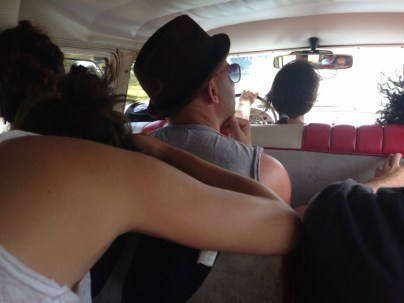
Finally, with the small car full, overflowing with people, bags and energy, we started on our journey. Latin music was blaring from the speakers as the old car buzzed down the dirt road. The driver was talking in Spanish with the two Italian travelers in front bench, the Italian man was chatting with the younger French man in front of me in English. An older French man sat in back and alternated between French and English while conversing with me, a French woman and the Italian woman in front of him. Languages changed like television channels as everyone in the car familiarized themselves with their fellow travelers. The 1940s Ford contained a quilt of cultures, patched with a various mix of languages, crammed together in the same space all with their own story. Outside, the indescribable green landscape flashed by our window as we cruised through the winding hills. The driver sang to us in a strong, deep voice, his hand tapping to the beat outside the window. Occasionally, he would stop in the middle of the highway to answer his cell phone as cars passed in the lane beside him. Once his call ended, he picked up the speed and carried on like nothing had happened. Throughout it all, we were unphased.
IMG_5382

Our full collectivo back to Havana

My heart was intoxicated by this unique experience and my ears jumped around the car hungrily trying to comprehend the various languages. I reveled in the opportunity to refresh my French and practice my Spanish and comforted by the rare opportunity to fall back into speaking English. With each mile, I missed the beauty of Viñales and the relationships I had made there more and more but, at the same time, I was excited to get started with my new adventure in Colombia. I just had to get through one more night in Havana.

Viñales was my saving grace in Cuba. Its unbeatable geography and vegetation coupled with the quaint, quite town and authentic people made up for my bad impression the country based on my time in Havana. After counting down the days until my departure for weeks, I was suddenly feeling sad about leaving. Looking down at my phone, I was comforted to see a text from a new friend in Viñales. “Me puse muy triste al igual que la mujer de la casa cuando vi que te ibas…que tienes muchas personas en Cuba que te quieren,” he wrote. I understood the message, thanks to my accelerated real world Spanish lessons in Cuba, and smiled. “I was very sad to see you leave, same with the woman of the house…you have many people in Cuba who love you.”
IMG_4910

The hills began to fade as we got closer and closer to Havana. Right as we crossed into the city limits on the highway, the French girl sitting next to me screamed. My gaze jerked upwards trying to figure out what happened. The driver slammed on his breaks the car and began to pull the car over as he pounded on his dashboard desperately cursing in Spanish. I assumed our car broke down until I looked to my left to see a body lying facedown on the road. Next to it was a blue, antique American car with a freshly smashed windshield stopped perpendicular to the highway. Oh my God. I turned to my right to see the young French man covering the eyes of the sobbing French woman as we slowly drove by the body. The tension in the car was strung tight like a rubber band waiting to snap as we all absorbed the scene behind us. Seconds later, fast paced French and Spanish shot through the as everyone tried to figure out what had just happened. The French woman, unable to speak, continued to cry, then raised her hands miming a person coming out of nowhere onto the highway and a car crashing into him. Sitting in the middle seat, she had an unobstructed view of his body being thrown across the highway. I hadn’t seen the accident happen as my view was, thankfully, obstructed by the head of our driver, but I still felt nauseous and on the verge of tears.

Pulled over, we sat in silence processing, the energy in the car still abuzz but now panicked rather than joyful. Suddenly, the driver shouted, “Está vivo,” jumped out of the car and ran across the highway. He was alive.

Cars and ambulances stacked up behind us turning the previous freeway into a parking lot. Occasionally, one of us in the car would dare to glance back to see what was happening but the haunting sight of the man in white shirt and jeans lying on the highway stopped our glances from lingering.

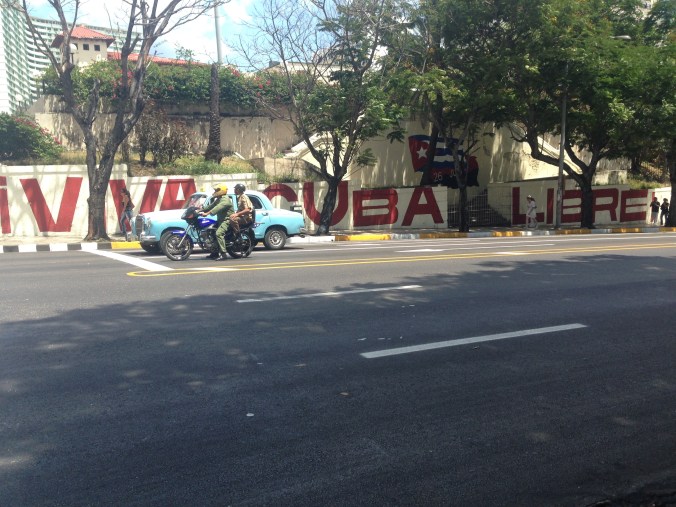
Propaganda on the highway back into Havana

After about 20 minutes, the driver came back to the car in an air of exhaustion. “Está vivo,” he whispered as if he wasn’t sure how much longer it would last. Without another look behind us, we drove off in a heap of exhaust towards the city. There was no more music and the silence congested the air in the car with despair. The driver muttered to himself in Spanish, “Havana es loco. You come here and this is what happens. The people are crazy. Havana is crazy.” His singing had stopped and his reflection in the mirror showed no traces of the infectious smile that radiated throughout our drive in the countryside. As we got closer to the city, the silence in the car got stronger as the noise from outside increased. The luscious green hills transformed into crumbling buildings. The calm highways changed into congested roads. It was hotter. Everything – the air, the energy, the people – felt heavy.We drove through familiar streets, past famous monuments and cultural icons. For the first time in a week, my countdown to leave was back on. Only twenty more hours and then I can leave, I thought. Next to me, the French woman continued to cry.

Dancing in the Rain

“Yo? Yo no bailo muy bien…” I explained when asked to evaluate my dancing abilities. “Yo tampoco” replied Yoandi, a Cuban musician who lived above me in the spare room at my Casa in Viñales, “Me neither”. I was comforted by the fact as he demonstrated the basic salsa steps. My movements were slow, stiff and conservative, but I followed, enjoying the rhythmic music that hummed around the outdoor Casa de la Cultura. After a few songs, we paused to cool ourselves off with our makeshift fans which were, in reality, just torn off cardboard squares from one of the cases of rum. “Ay! Que calor!” Yoandi exclaimed, not for the first time that night, about the heat.

After a minute or two he grabbed the hand of a female friend who was passing by and they gracefully moved over to the center of the dance floor. Mesmerized, I watched as they glided across the floor, moving so perfectly in ways that couldn’t be spontaneous, except I knew that they were. If this is what being bad at dancing meant then I was on a whole other level of awful. After a song of twists, turns, spins and dips, Jose, one of Yoandi’s friends, stepped in in perfect synchronicity to take his place. “Enserio?” I said at his return, “Tu no bailas bien?” He shrugged and sheepishly grinned at me. “Mas o menos”.

We continued to fan ourselves as a mixture of Cubans and tourists passed by our spot near the stage. Yoandi, Jose and their friend Osvaldo were continuously shaking hands, kissing cheeks and hugging familiar faces who walked by. I guess that is what comes with living in a small town. Occasionally, their vivacious voices would sing along to the music adding to the healthy buzz of life that overflowed from the bar.

“Que calor!” Yoandi shouted again as we gave dancing another try. My movement was looser, I felt more relaxed, intoxicated by the energy in the dance hall and the music blaring from the speakers. Suddenly, it started to rain.

The drops fell down, tiny specks of relief from the heat that had been so present in the air that evening. We kept dancing. The glistening drops mixing with sweat and fueling the energy of our movements. For a second, I stopped and realized: I am in Cuba, speaking Spanish, salsa dancing in the middle of the night under the rain. In this moment,  I understood that even after all of the challenges and disappointments that I had faced in Havana, I really was following my dream.

Sometime around 1:00 a.m. there was a break in the pulsing Latin beats and seductive salsa rhythms as Justin Bieber’s voice broke through the speakers. Daniela, another one of Yoandi’s friends, grabbed my hand and she pulled me out into the crowd to sing and dance along to to the one and only American song that was played all night. Everyone around me, Cubans and tourists alike, were shouting out the lyrics to “Sorry”. When the song started playing, I thought I finally had the advantage after being unable to understand or sing along to most of the Spanish songs played that night. It turns out, even though few locals in town spoke English, everyone loved Justin Bieber and knew his lyrics just as well, if not better, than I did. I guess even in Cuba you can’t escape the Biebs.

For the second time that week, I stayed until the Casa de la Cultura shut off its lights and the crowd of people filed out into the street. This time, rather than passing a bottle of rum back and forth with my adoptive Cuban parents (the name Rigo and Darelys had given themselves when they welcomed me into their home) while listening to live music, I spent the whole night dancing. After leaving, Jose, Osvaldo, Yoandi and I stood in the center of the puddle filled plaza trying to decide what to do next.

IMG_5191

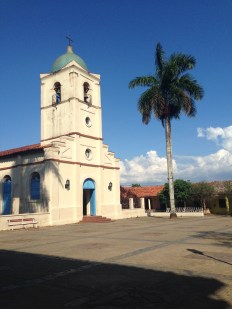
The cathedral in the main plaza outside of the Casa de la Cultura

We wandered the streets until we came across a bar. We funneled in and grabbed a spot on the porch. The boys continued singing and I continued smiling. Jose, a Viñales native who had spent a year in Australia, and I started a conversation about living in a new country with a new language finding hilarious similarities in such different situations.

“I thought my English was pretty good before going to Australia, but once I got on the plane, the flight attendant offered me a meal. She spoke to me in English and I didn’t know how to respond so I just shook my head no. I was so hungry and I didn’t eat for 24 hours,” Jose explained to me about his first time on a plane and first time leaving Cuba. I started laughing. “The exact same things are happening to me!” I said, “Half the time people offer me things and I don’t know what they are asking or if there are strings attached so I just say no.”

Jose translated what we were saying to Yoandi who looked at me and burst out laughing. “Es por eso que ha dicho que no a todo lo que te pedí,” he said. That is why you said no to everything I asked you. Yes. That is why. Unfortunately, during my time in Cuba, it seemed that there were strings attached to everything. Every invitation came with the expectation that you, the foreigner, would pay. Every friendly greeting in the street led to a request for money. Every question I asked about directions led me on a ‘tour’ to a destination that I didn’t want to go to. Soon I learned that in Cuba the safest answer was always no.

In Viñales, however, the answer could be yes. An invitation there was just an invitation. Walking through the valley, if someone on a horse offered you a ride, it was just hitchhiking on a horse. An invitation to go dancing was just an invitation to go dancing. If a friend offered you food it was just because they wanted to share a snack. It took me several days of saying no in Viñales to realize that the intentions were much different than Havana. The night I decided to extend my stay was the night I started to say yes. Saying yes (after checking in with my intuition of course) and going with the flow made the last three days incredible.

IMG_5183

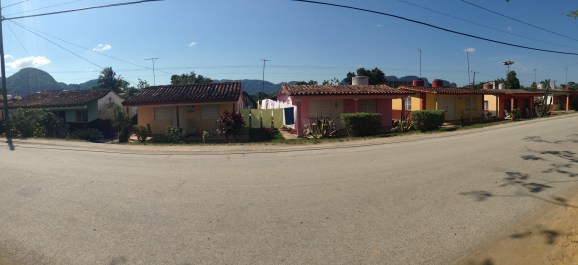
The beautiful streets of Viñales

We spent the last half hour of the evening standing in the street plotting for ways that I could stay in Viñales. I could take a cab at the next day 2:30 a.m. to make it to my 8 a.m. flight, they could borrow a friend’s car and drive me straight to the airport themselves, I could just stay and not leave at all. It was 3 a.m., rain was still falling from the sky and we didn’t care. The three weeks I spent in Cuba had been some of the most challenging of my life and yet, on my second to last night, it all seemed worth it. We knew there was no way for me to stay. Resigned to my impending departure at 9:00 a.m. the next morning we made the most of what time we had left. Out in the streets, the rain kept falling and we kept talking, dancing and singing. Maybe if we stayed awake, the morning wouldn’t come.


I Will Go With My Father

When I was young, I loved to sing. As a child I sang all the time whether it be an appropriate setting or not. Out at to dinner at restaurants, I would stand up on the tables and sing or put on shows beneath them. My voice was my gift and one that I was willing to share generously. That all changed as I got older.

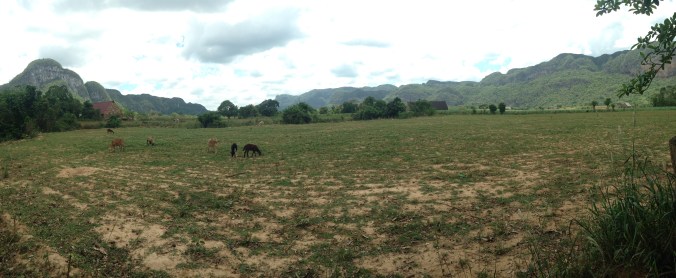
When I was older, I stopped singing, especially in public. It had been years since the last time I sang in front of an audience as I walked through the valley in Viñales, Cuba. My pace was leisurely and in my mind I was envisioning a big tree under which I wanted to spend the day. I walked in silence, observant to the sounds, smells and views in the magnificent valley. The geography around me looked prehistoric. It was marvelous, incredible and completely indescribable. As I walked, I passed a narrow path lined with bamboo trees and stopped. Unlike me, the trees were singing. Unashamed and without reserve their voices vibrated with the whistling wind emitting a beautiful sound that harmonized with the rustling of leaves. I listened for a while and then continued my journey.

The peak of my singing career occurred at the age of 12 when I recorded a song called “I Will Go With My Father” with my dad on his album Crossing Over (you can listen to it here). The experience in the recording studio was invigorating and exciting. My pre-teen self would describe it as SO COOL. Of course, at that age things quickly go from being so cool to uncool especially when other people get involved. For me, these other people were my step siblings and little did I know that the song I had so joyfully recorded with my father at the age of 12 would haunt me for the next decade.

After an hour of wandering through the valley, I found the exact spot I was looking for. There was a large tree that provided much needed shade from the hot Cuban sun, a smooth blanket of earth to sit on overlooking a little river and a bouquet of mountains. It was perfect. I dropped to the ground and just sat. The book, journal and iPod in my bag were left untouched. All I wanted was silence. The mountains and the stream captivated my attention for an unknown amount of time. People on foot and horseback crossed the river in front of me and continued on their journey without a second glance at the little American tourist sitting alone under a tree. I was invisible. Except I wasn’t.

IMG_5313

As the years went by, I Will Go With My Father became a weapon used against me – an instant trigger of embarrassment and shame. When guests or friends came over there was always the threat that Maddie, Jack or Caroline would put it on the stereo and that I would be forced to listen to it and endure taunting and laughter. There was one time in particular that I remember. At our family cabin in Minnesota, we had friends passing through, out of nowhere, I heard the first part of the song lyrics echo through the speakers and darted across the room to turn it off. I was stopped. A step sibling, I can’t remember which one, held me down on the couch, their large physical size disabling my ability to stop the music. I started writhing and kicking, trying to free myself, and screaming in an attempt to drown out the sweet voice of a child so excited to sing. The volume got louder. My shouts weren’t enough. Pinned down on the couch I was powerless to avoid the voice of a little girl that I had come to hate. While this time we were alone in the cabin, even if my mom and stepfather had been present the behavior would have been tolerated as it was many times before. Bullying, tormenting and using vulnerabilities as weapons was common behavior in the household we lived in. In retrospect, it wasn’t okay, but at the time, with no adult stepping in to stop it, it was. This wasn’t the first time I was restrained as the song was played and it definitely wasn’t the last. Eventually, I would throw a tantrum every time I heard it or it was brought up even by someone I cared about. The bullying, the song, my voice scared me. That night, in that moment, the song, and the tormenting, went on.

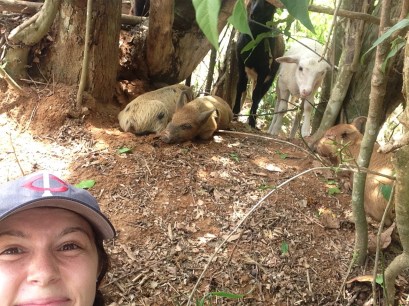
Out of nowhere, in the silent and peaceful valley,  I suddenly felt like singing. This urge came out of nowhere and was a desire that had become completely foreign in recent years. The song that came to my lips is not one with words or one you would recognize. In fact, it’s not even a song at all. It was a melody pulled straight from the mountains and released into the incredible valley around me. Suddenly, I was singing. People still passed, and though my voice dropped, I didn’t go silent. They still didn’t see me. Noises started to rustle around me, however, and suddenly I was no longer alone under the tree.

First, there were three piglets. They came sniffing around the tree and simultaneously collapsed for their afternoon nap behind me. Then there were three lambs who bravely left their grazing mothers nearby to see what was happening. Then, chicks came, pecking around the sleeping baby animals as I continued to sing. The little girl inside of me, who loved to sing, felt it was finally safe to come out of hiding after ten years of silencing her voice.

IMG_5303

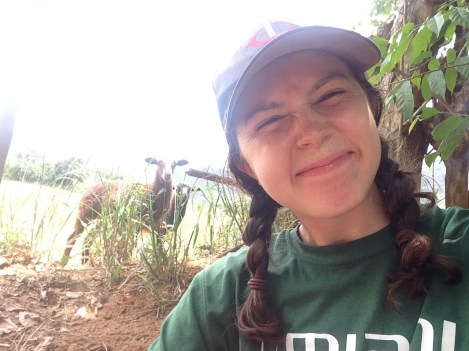
A couple of my new friends

I will go with my father a-ploughing 
To the green field by the sea,  

These are the first two lines of a song that has tormented me for over a decade. And yet, here I was, in Cuba, in a green field by the sea, after over ten years of running away from the song, living out its lyrics. It was astonishing the synchronicity between lyrics that haunted me and the incredible day I had that brought me indescribable joy.

My father paved the way for me to do what I’m doing. He ploughed the toxic fields of destructive family systems, unhealthy patterns and emotional minefields for years so that they were safe for me to explore. I am able to develop into the adult that I am because he (and my incredible stepmother/mother Maureen) created a space where it was acceptable to do so. When I was a child, however, the fields weren’t safe. As I grow up and become my own person, however, I am ready to take on my own share of ploughing through destructive patterns that have been stifling for so many years.

And the rooks and the crows and the seagull 
Will come flocking after me.  

While there were no rooks, crows or seagulls there were piglets, kids (goats, not children), lambs, chicks and foals. And all of the animals (baby animals, I might add), like in the song, came flocking after me.

IMG_5311

The audience for my impromptu concert – my first in over ten years

I will sing to the patient horses 
With the lark in the while of the air,  

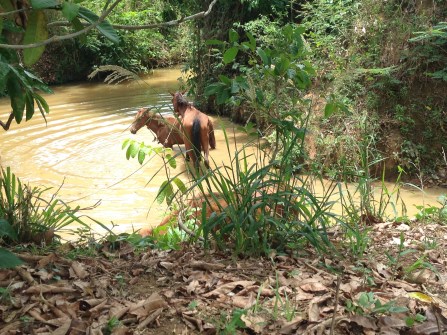
I sang to horses, patient ones, as farmers washed them in the river in front of me. Old horses and young foals took their time in the river reveling in the relief of cool water after hours in the hot sun. The farmers may have heard me, the horses definitely did, but, for the first time, unafraid of judgment, I kept singing.

IMG_5298


And my father will sing the plough-song 
That blesses the cleaving share. 

My father has been singing for years, he rediscovered his voice at the age of 40, right when I was losing mine. Singing in the mountains was a powerful and healing experience. It wasn’t the 23-year-old Lucy who sang in Viñales that day. It was the 3-year-old girl who loved to belt out ballads at the top of her lungs in restaurants and the 12 year old girl who was so excited to have her voice recorded. Surrounded by baby animals, just as innocent as I was, the younger version of me finally had a safe place to sing.

Away from the valley and away from Cuba, I listened to the song for the first time in years. This time, instead of screaming or fighting or crying, all I wanted to do was sing along.

***One of my deepest secrets up until this point is that the song is on iTunes. You can listen to it and download it here

An Evening with the Cuban Police

“Es un crimen de mentir a la policia en Cuba.” The policewoman glared at me from across the desk. I’m not lying, I thought, I just don’t know how to fucking count in Spanish. “Si miente a la policía, yo le enviará a la inmigración.” Two and a half hours into my interrogation with the Cuban police, that seemed like a very good option. At this point, anything that got me out of these whitewashed walls filled with propaganda posters, or better yet, out of this country, seemed like a good idea.

To all of those (and there were many) who predicted that I would end up in a Cuban jail, this experience was pretty close. Though I had not committed a crime, given the long ordeal with the police, I might as well have spent the day in handcuffs. The night before, my money had been stolen from the Casa Particular where I was staying and I was going to all lengths to try to resolve the situation. My Spanish was holding up pretty well, however, being essentially self-taught, numbers were something that I had found trivial and skipped after 50. Too bad money has everything to do with numbers and the numbers that we were dealing with were a lot higher than 50. The woman across from me rolled her eyes as I stuttered through another numerical account of what I had had in my wallet earlier and what I had now. She looked like she would rather be anywhere but here with a foreigner, particularly an American.

This was not my first experience with a robbery. Years ago, around the age of 13, I had my money stolen from me by a girl who would eventually become my stepsister. The memory has faded in the years since and been tainted by carefully calculated lies which manipulated my memory. I think it happened at either in my locker at school, or maybe my room at home, I think it was $20 dollars (much less than what disappeared this time), months after it happened, I thought it was my neighbor who took it, but that wasn’t the case. At the time of the original incident, my knowing was as certain was it is today: it was Maddie.

Entering the Cuban police station, I had been nervous, but had never felt clearer surrounding the details of an experience. The simple concept of being confident in my experience was a gift and one that I was not going to waste by backing off easily without fighting for the truth. The nerves faded as I settled into answering questions and explaining what had happened. Then I waited. Officers came in and out and were interested in the events that had occurred. I thought, at the time, it was because they wanted to help me but, after reflection, it’s likely because I was a girl. In the street, these same men, in their uniforms, would have been cat calling me in a way that is politically and socially acceptable in Cuba but would be considered sexual harassment in the United States. They asked several questions but the one I heard most often was, “La familia…es blanca or negra?” Are they black or white? I said, negra, and they nodded their head, walking away, as if that would have made a difference.

My dad, unknowingly, played a huge part in the certainty of my current experience. Previously, on a family trip to Kenya, he became the subject of relentless mocking from his children after declaring that we all needed to wear our passports under our clothes and around our necks at all times. All times included eating, sleeping, dressing up, going to the bathroom etc. At the time, it seemed ridiculous but as I started to travel alone, I was confident knowing that my most important valuables, including passport and money, were always safe on my body. Settling into my Casa in Cuba, I got lax and assumed that a lockable room was ample enough security to watch my belongings, at least when I was in the house. On the street, however, my snazzy, new money belt was always an attractive accessory to wear under my clothes and add to my waistline. It never left my sight or my body giving me confidence as to the one location where this robbery could have occurred, the house.

After about an hour in the police station, I panicked and wondered about the consequences of my actions. Was I making this into too big of a deal by involving the police? What would this accomplish anyways? What if nobody believed me? How will the family react? My concern for my safety grew and I made an emergency call to my dad. Though I had spent ten days in the streets of Cuba by myself, this was only the second time since arriving in this country that I had felt concerned for my physical safety. The first time involved an altercation with a taxi driver who tried to trick me because I was clearly a tourist. In that instance, similar to this one, I abandoned my normal, non-confrontational manner and stood up for myself. On the phone, my dad assured me that it would be okay and that I would never have to see this family again. The money was gone but I had wisely changed Casas and escaped the family forever. Turns out he was wrong. Moments after getting off of the phone, a police car showed up and I was escorted into a car with officers who were both more serious and less friendly than the ones I had dealt with earlier. In the car they informed that we were going back to the house. Immediately, I started shaking.

Cuba. What a unique place to have my first ride in a police car. The car was old, like the majority of cars in the country. The seat was frayed and, obviously, there were no seatbelts. The doors to the backseat opened only from the outside. Inside, I felt trapped unable to escape this car, this experience and this country. There were three others in the car with me, two officers who rode in front and a random guy, about my age, in a lab coat in the back. He didn’t speak a word the entire time and seemed to just be along for the ride. An officer on a motorcycle escorted us to the house and chatted through the window as we drove. Upon arrival, we were greeted by another officer. For a second, surrounded by the police in a country that is supposedly aggressive when it comes to protecting its tourists, I thought they would take the case seriously, but the second we got in the house, it was clear I was wrong.

When my money was stolen at the age of 13, I knew what happened and so did my mom. In fact, she went to my unbeknownst future stepmom bashing the girl’s family and sharing the fact that Maddie stole from me. “The family can’t be trusted,” is what she told Maureen. Funny how less than a year later she was dating the girl’s dad, John, and somehow had worked it into my head that my neighbor and friend Elise stole my money. Not Maddie. Her mind games worked. I barely remember the incident now.

Rapid fire doubts and other explanations were thrown at me like pitches in the nearby Estadio Latino Americano. Channeling the patient eyes of a batter, I waited for the perfect pitch. This time, unlike the last, it wasn’t worth swinging at anything else.

If my money was on me all of the time then how could it have gotten stolen? In the house, in my room, the only time it was not on my body. Only you and the family have the keys. Exactly. When you were in the house on the main floor the family was always with you. That is not true. They come and go from the main floor. Plus, last night I went on a walk with everyone except Oseyda, the mom, who stayed in the house. She was with friends. That is not true. You walk alone through the city. Yes, and my money is under my clothes where no one can reach it. Oseyda says you have gone out to discos alone. Yes, and my money is under my clothes where I can’t even reach it. Did you drink at the discos? No. Oseyda says you met an American boy the other day. Yes, we met at a restaurant. We ate dinner together. I went home. That has nothing to do with anything. You are in Cuba alone. Yes.

That was my crime. Being alone in Cuba. That had been thrown at me by Oseyda from the second I questioned the location of my missing money. It was thrown at me again as my only Cuban contact sat down with me to try to mediate the situation with the family. Finally, with the police, it was brought up repeatedly by Oseyda as she buzzed with her incomprehensible Spanish, pulling the police aside, away from me, for private conversations. When I asked her to repeat something she just looked at the police, threw up her hands and said, “See, she doesn’t even understand.”

I did understand. It may have been years later, in a different country and in a different language but it was the same situation. Oseyda was the Cuban embodiment of my mother, doing all she could to belittle the “little” girl who stood in front of her. Spinning stories in an attempt to tarnish the validity of my claims and provide a more rational and less incriminating explanation. The police were eating it up. I still wasn’t swinging.

Solitude does not mean a lack of safety or lack of competency as everyone tried to make it seem. Traveling alone means watching your own back, making more cautious decisions, taking a cab home instead of walking, keeping your money on your body at all times. It means, as a girl, carrying pepper spray in your bag when walking at night even though it is probably illegal. When by myself, my guard is up more than any other time because I know that for all incidents, I am 100% accountable. Traveling alone is not why this happened. But for Oseyda it seemed like a damn good defense and for the police it seemed like a damn good excuse. For me, it seemed like a damn good opportunity to do absolutely everything in my power to have my own voice, defend myself and keep myself safe. So that’s what I did.

As the police escorted me out of the house, we passed a brand new Chanel purse sitting on the couch. I thought about the new sculpture and kitchen fryer that Oseyda and her husband had bought and showed off to me yesterday. I remembered moving to a new house earlier this afternoon and, before leaving, Oseyda demanding to have all business cards with information as to the address and phone number for her Casa back. Not once had she or her husband ever said they were sorry this happened or that I should call the police. All they said was that I was here alone.

No one had to believe me. My own knowing was proof enough though I won’t lie and say that the family’s new purchases and accusatory reaction to the situation wasn’t a little extra reassurance.

Nothing would be resolved. My money was gone. Throughout the official report (which I was not allowed to have a copy of) and interrogation that followed at the station, I was sure that nothing would happen. Except, everything happened. I found my voice. I fought for myself and for what I knew to be true. I defended myself, for hours, in a language that I did not fully understand. Struggling for words that I knew existed to explain an experience that was far from simple. Moments of fear came and went like the waves of the ocean crashing up upon the Malecón. But throughout it all, the walls of the Malecón stayed strong, protecting the city that it surrounded.

I was no longer a 13 year old girl getting talked out of her experience, believing a story that was not her own and strayed so far from her truth. I knew. And I fought.

Nearly 10 years later, alone in a communist country, I got my voice back. Maybe I am still standing at the plate or maybe I got walked. Even though I didn’t get my money back, what I know for certain is that I didn’t strike out. I am still in the game. The perfect pitch, the perfect moment, is still waiting. My batter’s eyes are a bit more experienced, my timing more patient and my intuition infinitely stronger. And that will make all of the difference.

There’s Something About These Islands…

“You are going out dancing ALONE?!” Asked a man behind me in the long line to get into the increasingly famous Fábrica de Arte Cubano. Just yesterday, this place hosted Kayne West and the Kardashians and the night before it featured a party for Fast and Furious. Fabrica or FAC is a progressive and unique hangout in Havana. The building features a nightclub, museum, bar and concert hall along with a fashion and jewelry store making it the perfect place to go by yourself as there is endless amounts of exploring to be done through the winding hallways. Rolling my eyes, I replied yes, refraining from explaining, like I had many times that week, that often times, I just enjoy spending time by myself. The line inched forward and I questioned my decision to start a conversation with the English speaking Japanese and German boys behind me. “You look so comfortable, it looks like you are in your pajamas, and you’re here by yourself.” Yup, definitely a mistake.

IMG_5048.jpg

The last time I was this isolated was years ago on an island not too far from here. Phone connection was just as limited as in Cuba and internet, texting and email were all essentially non-existent. Living on that island in the Bahamas taught me how to really appreciate solitude and accept disconnection from anything outside of myself. It is a lesson that I will admit I have forgotten to a degree in the years since.

I find it again, in moments, sitting alone in cafes, reading in a park or walking aimlessly through streets.

People seem to think it’s strange that I’m traveling alone, particularly to Cuba. Earlier this week I was lectured by the grandfather of my Casa that Cubans don’t spend time alone, they never go anywhere without being accompanied by a friend, it’s just not natural. I’ve stopped caring that my traveling alone makes many people, especially here, uncomfortable. I trust myself to stay safe and am learning more and more how to appreciate the simplicity of my own company.

After over an hour of waiting in line, I finally had an opportunity to enter. The first chance I got, I burst away from the group, skipped the bar and ran straight to the pulsing beat radiating the walls of the old factory. The music was good, really good, and I silently thanked Miami for introducing me to electronic music. At first, it was awkward. People freely swung their bodies around me, dropping to the floor, moving their arms, shaking their hips, moving however the music, or their numerous drinks, wanted them to. Slowly, I started to move, checking over my shoulder to see if anyone noticed that I was alone. It was hesitant, but I was dancing.

I am not a dancer. Ask anyone who knows me well. Sometimes I sing and I like to write, but dance has never been a way that I’ve expressed myself. There is something about these islands though…whether it be the scenery, the music or the isolation, it gets to me and when I dance, I don’t feel alone.

The happiest moment of my life happened when I was alone. In the Bahamas, as a part of the school program, I was required to participate in a 48 hour solo experience on a beach. There was a limited list of items that were allowed to be possessed during this experience: a small amount of food, water, a sleeping bag, a tarp, towel, sunscreen, swimsuit and journal. Flashlights were not on the list but could be used as the one luxury item allotted for the experience. I didn’t take one. I brought a hammock instead. Watches were also considered a luxury item, so I spent the first day gauging the position of the sun to estimate what time it was. It didn’t seem to move.

Outside, alone on that first night, I couldn’t sleep. I rocked gently in the hammock and sang to myself before giving up. I picked up my sleeping bag and walked out of the forest to the beach where I paced back and forth on the sand under the light of a full moon. The next morning, I woke up to a sunset and the start of a rainstorm. Momentarily stressed about my possessions, I panicked. Then, after a second of consideration, realized that there was nothing in my power I could do to stop the rain. So I grabbed my journal, my most important possession, and my sleeping bag and ensured their safety under my tarp. After that, I ran to the beach, feeling more free and filled with joy than I ever had in my life. Alone, I started to dance, wildly, uncontrollably, unconsciously. Minutes or hours later, Gabe, the program supervisor walked by to do a silent, non-verbal check on all participants. I gave him the required SCUBA signal for ‘okay’ and continued to dance. Days later, he would comment to me that he had never seen anyone look happier in his life.

“Cooooba, Cooooba, Cooooba,” voices around me shouted. The music blared on. As the bass dropped, so did my inhibitions and from there, I danced in a way that is only possible when you are stone cold sober, wearing an outfit that apparently looks like pajamas and alone in a foreign country following your dreams. Songs faded in and out but the beat stayed constant, pulsating the vivid colors of a country with a lifeline and heartbeat that is hard to explain. It fed my body as I moved without caring. On this dance floor, I could drop my guard as it was the one place in the city where nobody was bothering me. Ironically, while I couldn’t walk down a street without being harassed by men, I could dance, clearly alone, completely undisturbed. My dancing was freer and my heart lighter than it had been my first week in Cuba. Here I was, in the middle of the dance floor, in a country that I have always dreamed of visiting. I was doing everything that I had wanted to do. And I was alone.

It wasn’t the Bahamas, I wasn’t on a beach but the joy was still there. The joy of something terrifying, the joy of exploring, the joy of, for that moment, being connected to nothing else but yourself.

Havana 1, Lucy 0

I woke up today thinking things were better. A fairly smooth day yesterday boosted my ego and gave me an inflated sense of confidence that maybe, after five days of being in Cuba, I actually knew what I was doing.

The day started off great. I woke up to the rising sun with an idea in my mind of how I wanted the day to go, where I wanted to eat, what I wanted to see and how I wanted to pass my time. Downstairs, I chatted with my host dad after an incredible breakfast and a café con leche. Up until this day, we hadn’t had a conversation. His accent was the strongest and fastest out of everyone that I had met here. I felt uncomfortable being in the same room as him for the sole purpose of feeling like an idiot every time he said something that I didn’t understand (which was always). Our conversation started off badly. “Como blablablablablabla,” he asked me. I looked at him and he said it again and again and again. Finally, I just busted out a string of words along the lines of “I’m sorry, I don’t understand. Normally, I understand a lot of Spanish but speaking is hard. Here, the Spanish is different. It’s so fast, the accent is hard. I don’t understand and I can’t speak.” After that, he slowed it down a bit, but not much. We talked sports, college, work, life in Cuba, life in the U.S., my trip down to Colombia. Everything. For an hour. Suddenly, I understood. It was as if my nearly incomprehensible Spanish venting of all of my fears cleared my mind. After that, I could just be present. We watched TV as we spoke and out of nowhere a rerun of the 2016 Team USA Olympic Wrestling Trials came on the TV. He laughed as my face completely lit up and I pointed excitedly at the TV, saying “I know him! I know him!” as the faces of the athletes that I had lived next to for the past 10 months appeared on the screen. We watched the matches and I thought to myself that maybe, I’m not really that far away.

It got better and then it got worse. About a half hour into wrestling trials, right before I was going to leave for my first stop of the day in Habana Vieja, there was a knock on the door. Somewhere in the conversation my house dad mentioned that his wife’s nephew didn’t have work this week and could show me around Havana. GREAT! I thought. Little did I know that he had meant today. The boy showed up and asked if I was ready to go. “Sure,” I said as I had been planning to leave soon anyways. As we crossed the street he told me that his aunt said I didn’t have a boyfriend. I swore silently in my head as I instantly started to monitor my behavior out of caution and told myself to never tell anyone that I was single again. We wandered the streets of Havana without much of a purpose. It turned out that his accent was the most difficult one that I had encountered. That, coupled with a quiet voice, which was swallowed by lines of 1940s cars passing in the streets, led to little success for communication. Hours passed and each failed attempt at understanding his words beat down on me like the increasingly hot sun. Soon, I started to swear under my breath after each attempt to speak Spanish. It just kept getting worse. The language, the heat, the complete of misunderstanding of the city’s geography, and a growing feeling I couldn’t shake that something didn’t feel right with this guy – it all added up. Miles outside of my comfort zone, I wanted a one-way ticket back.

IMG_5008

The view of the city from the Malecón

Finally, enough was enough. I was tired of him asking me to buy him lunch, beers and bus tickets. I was tired of the heat. I was tired of spending hours with someone who I was unable to communicate with and who, altogether, wasn’t that friendly. My introversion was at its limit. I started to slowly hint that it was time for our afternoon together to end. “I need to call my parents in that hotel over there.” “I’m tired and just going to sit down and read for a bit.” “So, what are you doing for the rest of the afternoon? Going back home?” He followed me to the hotel, watched me as I read and wasn’t planning on going home anytime soon. “Are you going to eat something soon?” He asked in Spanish “I’m hungry”. That was it, I couldn’t skirt around the issue anymore and needed to just be direct, I NEEDED to be alone. “Necessito hacer las cosas en la calle sola,” I said. I need to do things in the street alone. He gave me a weird look, probably wondering what the hell I needed to do in the street by myself, asked for bus money and left. Finally.

DCIM100GOPRO

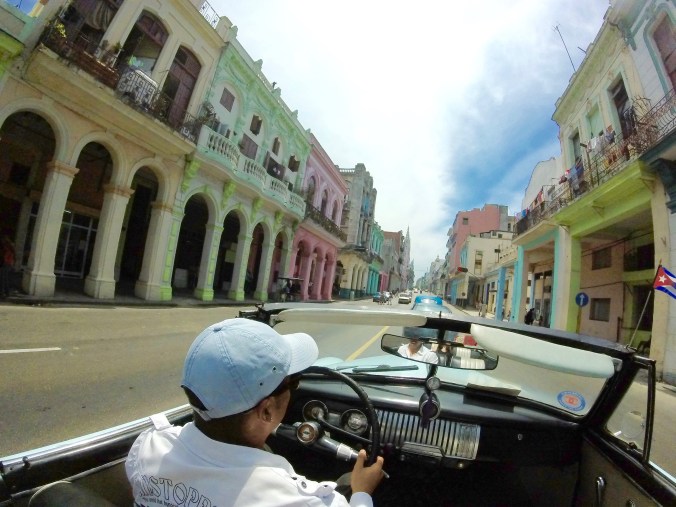
Driving down the streets of Havana

I returned to the house with questions of concern regarding my street errands (apparently the nephew had called to inform them of my exit strategy) and to find that my room had been cleaned. Something didn’t feel right about that, but when I brought up my concern and assured my hosts that I wanted to clean my own room, it was shaken off. Unsure whether it was my Spanish that wasn’t clear or if they just didn’t care, I gave up. I had had my money and valuables with me all day anyways.

The night ended with my first successful Máquina (shared taxi in an old American car) trip back to the house, a power outage, spending an hour playing with kids (for those who know me well, this will probably be the most shocking event that will occur over the next several months), and then retiring to my room early to watch A Walk to Remember because I needed some English and I needed to cry.

Tomorrow will be better. And the next day. Some days will be like today, but most won’t. Today, Havana kicked my ass. I lost. Badly. Havana won’t win everyday, though. Some days I will get points on my scorecard too.

IMG_5162

Spending the day in Habana Vieja on a day where I actually won

I told a friend before I left that Costa Rica was too easy. I needed Cuba to be more challenging, to push me, to make me speak Spanish and experience a new culture. So far, it has done all that and more. In quick WIFI message to the same friend, I stated that Havana had been everything that I told him I wanted but 100 times harder. And that was an understatement.

¡Bienvenidos a Cuba!

Today, I am closer to Miami than I have been in nearly a year, however, I have never felt further away. 24 hours into my three-week stay in Cuba, I don’t feel anymore adjusted than I did upon my arrival yesterday. I feel confused, frustrated, isolated and lost. Also, intrigued, excited and curious. And again, confused. Everything is new here.

Costa Rica is a country where you could get by being an American. You could spend weeks in the country without exchanging a single U.S. Dollar. You didn’t speak Spanish? No problem. There, being an American seemed normal. Walking down the streets of Nosara wearing a Twins hat, my one piece of clothing from home that really represented where I was from and the city that I had been trying for years to leave behind, I would have countless people walk up to me point out our shared roots.

In Cuba, it’s not like that. In Cuba, nothing is American. The currency makes no sense, the Spanish is so uniquely accented that it is nearly comprehensible to my novice ear. At least the streets make sense. Here, unlike Costa Rica, they have something that resembles addresses which makes navigating so much easier. If it was any harder, I would probably never make it home as there would be little point in asking for directions because I likely wouldn’t understand them anyways.

This is what I signed up for. When I announced that this would be a part of my itinerary I received several ‘are you crazy?! and at least one “you’re going to get arrested” reactions. Being here now, I realize that, yes, maybe I am crazy but no, I am not going to get arrested. Entering the country, despite all words of caution on internet blogs, is not all that difficult. I received no reaction to my passport while going through immigration even though I had been piecing together Spanish phrases in my mind to explain my entering the country. In fact, in the end, it was more difficult to get into Costa Rica than it was Cuba. Who would have thought.

IMG_5062

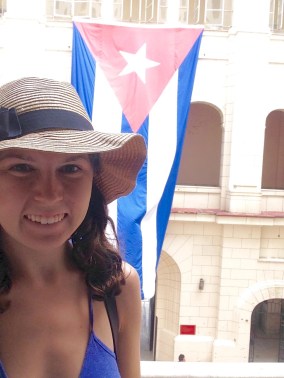
Made it to Cuba!

It will get better, in that I am confident. Last year, I travelled to Spain on a similar, last-minute, ‘what are you thinking?!’ trip. My knowledge of Spanish was nearly non-existent but I left, three weeks later, fluidly conversational with a new appreciation for the culture.

This will be hard. I came to the realization on the eve of my departure for this mysterious, isolated country that this will likely be the hardest part of my trip. Communication outside of the island will be incredibly difficult (even more so because my phone refuses to accept a Cuban SIM card), I will be speaking solely Spanish and the currency is just about as confusing as it gets. I can do it though. I know it. With each challenge, there will be a lesson, and those are the kinds of lessons that you can’t learn unless you are doing something crazy (like traveling alone as a young woman to a communist country that barely speaks any English with little to no connection to the outside world).