We’re Off to See the Minister!

Finally, I was healthy and my adventure was nearing its transition point from solely exploring to settling in a city and starting to teach. Pereira, Colombia, my home for the next five months, was nearly a week away. First I just had to get through the Ministry of Education teaching orientation.

Orientation was an introvert’s worst nightmare. Eight days of 10-hour long trainings combined with sharing a room and incessant small talk as I attempted to find friendship in a never ending crowd of new faces led to little to no alone time. The contrast between spending nearly a month isolated in a quiet apartment as I recovered from being sick to suddenly being surrounded by 250 people made it even worse. The first night, I sat at a table with strangers, looked down at my plate and ate. My social skills completely escaped me and even asking a simple question such as ‘what is your name’ seemed to be intrusive. I had no idea how to behave.

As the days went on my social skills returned and I went from silence at meals to starting conversations as I slowly re-immersed myself in society. The lack of connection became less daunting and, slowly as the small talk faded, friendships began to form. Once I hit that point, orientation became pure entertainment.

When signing my contract to spend five months teaching in Colombia, I never expected that I would be essentially signing my life over (in black pen, of course*) to the Colombian government. Obviously, that is an exaggeration, but during the first day of orientation I was shocked to see that a blood test was on my schedule. I knew I would be giving up a lot of my time and energy to my future school and the Colombia Bilingüe project but I had no idea that I would have to hand over a part of my body too. In disbelief, I prepared for yet another medical procedure in this country that already had so much of my blood.

Days were long. Really long. Training sessions were MANDATORY and went from 8 a.m. to 6 p.m. Breaks flew by and free time in the evenings felt essentially non-existent. Mid-way through the week long session all of the new English teaching fellows were scheduled to attend an event with the Minister of Education who was responsible for the Colombia Bilingüe program’s huge success. For those who don’t know, Colombia has set the goal of making the country bilingual by 2025. One of the ways they are trying to reach this goal is by bringing in hundreds of native English speakers to partner with Colombian English teachers in public school classrooms. We were huge part of this program and excited by the chance to leave the hotel and shake up our normal training schedule…until we learned that we had to leave the hotel at 5:30 a.m. At this point, we were all already exhausted from meeting hundreds of new people, full days, and long nights (for those who chose to extend their social festivities into the evening). As a result, the news of an early wake up call was not a welcome announcement. Breakfast started at 4:30 that morning and fellows congregated in the breakfast tent, lining up in unseen proportions behind a very distressed hotel waiter who controlled the coffee. At 5:30 we gathered outside with our groups and waited for the buses to come. That took awhile. Then we got to the hotel. And waited. Again. Upon arrival, we were locked in the presentation hall and prompted by an energetic MC to cheer when he called out the various continents from which we came and the placement cities to which we were going. As you can imagine, 250 young adults who had been dragged out of bed at 4:30 in the morning were not too enthused by that idea and so responses to his calls were hilariously non-existent.
13592231_10157132729110243_8197838978064704183_n.jpg

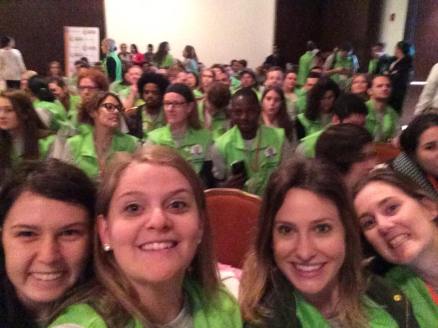
Somewhere between 6:30 and 9:00 a.m. – do we look like crossing guards?

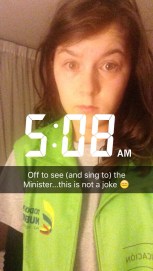
Another hour past and it was clear that there really was no set time for the Minister to come. She would arrive when she felt like it. In the meantime, we would continue to be ‘distracted’ be the extremely caffeinated MC. To top it all off, we were all dressed up in grey t-shirts and matching neon green Ministry of Education vests. Are you picturing 250 irritated and sleep deprived crossing guards? Because I’m pretty sure that’s what we looked like. In addition, we were supposed to have memorized a song to sing during the Minister’s entrance. I’m not sure if anyone actually looked at the sheet of paper with the lyrics but I’m certain that no more than 10 people were singing during the opening processional once the Minister finally arrived.
IMG_5921

Finally, minutes before 9:00 a.m. (four and a half hours after we left the hotel) she arrived. From there, the celebration was wonderful and it was inspiring to see Colombia’s steps towards change.  With the recent peace agreement with the FARC, Colombia has ended its civil war that has been going on for over 50 years. Its education budget is also, for the first time, higher than its defense and military budget. It is clear that Colombia is not the Colombia of the past and the one that so many Americans, and people around the world, are scared of. Colombia is changing.

13438986_10157136735710243_5759209578746844131_n

Pereira, Dosquebradas and Santa Rosa fellows meet Gina Parody – the Minister of Education

Despite the early morning festivities, the afternoon continued on as usual. Clearly it was more important to fit the training in than to take care of the wellbeing of the fellows. So before we knew it, we were back in class.

Days went by as usual, chock full of training sessions that were interesting and helpful but coupled with little to no breaks, completely useless. As the week went on people started to get sick, and tired, and just fed up in general. Attendance at the sessions started to waiver as people realized that once you signed in for the morning or afternoon sessions you could just disappear to the bathroom and never come back. Those who stayed in the sessions essentially tuned out (or at least I did). In class activity times turned into social sessions and during lectures, phones decorated the room like Christmas lights, completely bright and totally shameless. I, along with at least one other Orange Group member spent one session setting up Pokemon Go. Imagine my disappointment when I realized that the whole point of Pokemon Go is that you actually have to go…my plan to sit and play during class was quickly squandered. Unfortunately, the regional coordinators got wind of the skipping habits and, on the second to last day of training, decided to put their foot down.

By the last few days of training, we were all tired and desperate. Desperate times called for desperate measures. In the middle of another endless session one fellow attempted to leave early and, upon realizing that for the first time there was a regional coordinator sitting in the hall ensuring that no one left, decided to brainstorm a more creative exit strategy. So what did he do? He jumped out of the window. In the middle of class. I’m not kidding. Despite having very unsuccessful decoys that included me and two other girls in class, the teacher never found out. Moments after he successfully climbed up and squeezed the last of his body out of the very small window, we burst into laughter. At that point, there was nothing to be done, all that was left of the boy was his zip up jacket hanging on the back of his chair. To be fair, he wasn’t just bored of class. He along with two other fellows had tickets to a big soccer match downtown that afternoon. Unfortunately for the window boy, though, five minutes after he disappeared, we broke into groups and were allowed to spread out around the hotel to make lesson plans in groups. As a result his two partners in crime were able to walk away from class completely unnoticed and escape to the game.
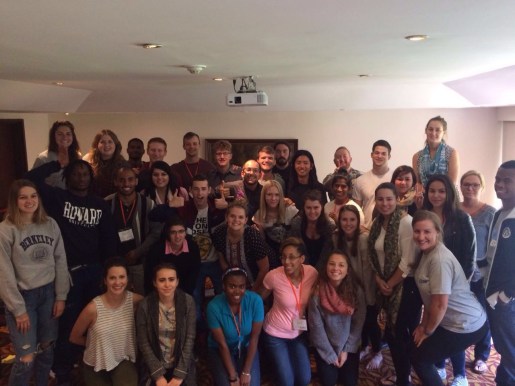
IMG_5945

The amazing Orange Group consisting of fellows who will be working in various cities in Colombia’s Coffee Region

Excitement to finish orientation, leave the hotel and settle into our placement cities built up throughout the week. Soon enough, it was nearly time to go. 24 hours before we were supposed to leave for our placement cities, no one had been told what time their flight was, where they would be housed upon arrival or the name or location of their school. Welcome to life in Colombia.
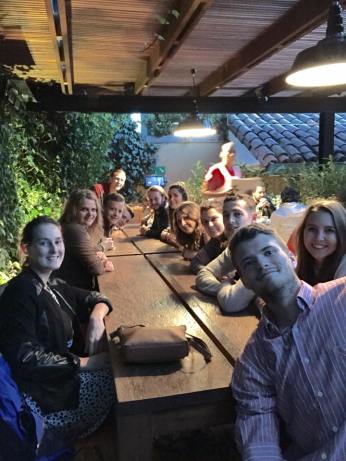
13692649_10106489007568711_945989896162473671_n

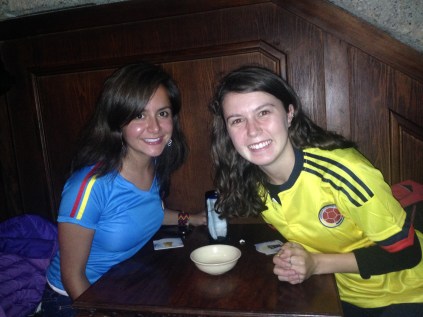
Out celebrating the end of a long week!

When the departure times were finally announced they were once again unwelcome news. Busses left the hotel at 4:00 a.m., 5:30 a.m. or 6:30 a.m.. Fellows in Pereira were assigned to the 5:30 a.m. bus even though our flight didn’t depart until 8:55 a.m. Despite the early wake up call, people didn’t hesitate from celebrating their freedom from orientation and their one chance to explore Bogotá (training ended at 4 p.m. that day rather than 6 p.m.). The next morning, people dragged themselves out of bed at ungodly hours, took advantage of the chairs and floors at the airport for nap time and boarded planes to start their new next chapter in their placement cities.

*In Colombia all documents need to be signed in black pen or else they are invalid. You also need to write legibly and can’t make mistakes as anything crossed out also invalidates the document. We were reminded of this countless times during orientation.
I Am Not My Mother

I have been incomprehensibly exhausted and and relentlessly sick for nearly four weeks. None of it made sense. All I had been doing was sleeping, cooking, reading, and if I was really feeling up for it, walking down the street to sit at a coffee shop for a maximum of two hours or going to a restaurant to watch a Colombian soccer game. How could I still be feeling this bad? It didn’t add up but the exhaustion was constant and radiated out from the center of my being with such force that I was powerless to its will. While I knew that I was fighting a super virus and had some sort of infection, the exhaustion had to be more than just an illness. As weeks went by without improvement, it became clearer and clearer that the exhaustion likely had roots in emotions. I was tired of maintaining my old patterns.

One of my greatest attributes is that I am observant, often times to a fault. I am able to pick up information and cues from my surroundings and use that to act in ways that I think will keep me safe. Or whatever that means. Growing up, this skill was particularly useful in picking up on my family patterns, and through this, I learned how I was supposed to treat my mother. She was supposed to be taken care of, always, especially by her daughter. It was exhausting but behaving this way was better than the consequences of challenging the system. In my family, like many, I was conditioned to pick up on the cues to know how to behave in certain situations and then act accordingly by walking on eggshells. I learned quickly because if you failed at this dysfunctional game, you were punished, shamed or blamed. I could tell immediately when I displeased my mother. There would be a sudden change in the temperature of the room, a look in her eye and a higher tone in her voice. In the background, I could hear the whistling of a teakettle, slowly increasing in agitation and needing to be simmered down in order to avoid a disaster. I could pick up on my mother’s mood from the way she navigated through the kitchen or drove down the street. Any banging cupboards or slamming of breaks indicated that my guard needed to be way, way up. She wasn’t a yeller, not often, but body language was almost more terrifying.

I quickly learned that my mother is always the victim and her power is being pathetic. The perpetrator is always the one who falls out of line and challenges the system. In my family, the world revolved around women who were believed not to be capable of taking care of themselves. Except, they were capable. No one allowed them the chance to take responsibility for their experiences or mistakes. There is no room to grow when you are never called out for your behavior. And if you did call them out then YOU were causing problems, an inconvenience, stirring up trouble to make everyone’s life difficult.

When I left my mother’s house at the age of 19 and changed my role in the family system everything imploded. In asking for my mother to show up for me and my brother I was instantly transformed from the observant, obedient, and appeasing child to the problem child – at least in the eyes of my family. In speaking the truth about why I left, no one felt bad, not for the bullying in the household, not for my mother choosing her husband and stepchildren over her biological children, not for the promises made, and then broken, by members of our blended family. Nobody seemed to care about what I went through. All they knew is that I was upsetting my mom and therefore causing problems. I, the daughter, was blamed and responsible for the current turmoil in the family and my mother’s distress. And I, as the daughter, was responsible for fixing it. For the first time in my life, I refused.

My refusal to fall back in line was not taken well. In an attempt to get me back in the system, and to avoid the truth about what actually happened, my mother was painted as a weak damsel in distress. Rumors circulated and I was told that my mother was devastated at our limited relationship, confused as to the reason and that she would do anything to get me back. I had attempted to leave the system and yet by painting my mom as a victim and believing in her limited capacity, everyone was trying to suck me back in.

I bought into it. Full heartedly. Reluctant reflection throughout my healing crisis made me realize that I am still walking on eggshells. I am toeing the line, afraid of crossing it in fear of punishment. In the back of my mind, with every move I make towards self-liberation, capability and independence, I am picturing my mom’s reaction. I see her fuming in my head, slamming around the house, ticking like a time bomb waiting for the wrong move to make her explode. It makes me angry that after so many years a part of me is still afraid.

There is a part of me, larger and stronger than the fear that is so much reduced from when I was a child, that empathizes with her. I have been there. I know how hard it is to try to break your conditioning and be called out on your shit. I, like many, know the feeling of shame in the center of your heart, the very core of your being, when you realize that you have messed up. I know what it is like to be frustrated, time and time again, as you work to break your old patterns and yet keep falling back into them. I know what it is like and I can relate to the struggle of anyone going through it. My God is it hard. But, what I need to realize is that I am not my mother and I don’t want to be like her – a pathetic damsel in distress. I keep trying to pull away, distance myself from her, let go of my conditioned obligation but it is keeping me hooked.

I. Am. Not. My. Mother.

I owned my mistakes and am working through my shame. I have admitted the ways in which I betrayed my dad and Maureen, threw them under the bus, and kept living my life thinking of no one but me (and my mother who I was trained to give up the last piece of my soul to protect). I apologized to my brother for the times that I bullied him when we were children and am working, consciously, to never fall back into that pattern again. And with my sister, Marae, we’ve talked, several times, about why she can’t trust me. I don’t blame her. And I am working, again consciously, to have my actions meet my words to prove to her that I am someone who she can trust. Honestly, I make mistakes ALL THE TIME. And it drives me crazy and takes me straight back down Shame Lane. But, when I fuck up, I own it (at least most of the time) and take responsibility by changing my behavior. THAT is working on it.

My mother doesn’t own it and therefore can’t change her behavior. She has never admitted that her house wasn’t safe. She has never told me that she understands why I left and removed myself from an unhealthy situation, even though while we were living in the same house she told me several times that she was worried about how Hunsicker children’s behavior impacted my brother.

My mom acts like she still doesn’t understand what happened and I continually fall into the same trap of believing her. I continue to behave in the same way that I was trained to behave since I was born: take care of your mother. Rationally, I know that isn’t right nor normal nor healthy. And yet, the more I mentally distance myself from the behavior, the deeper part of me still feels tied to that old emotional pattern. I hold onto it like a lifesaver floating in the ocean, believing that it is saving me even though it might be better for me to let go and drown. This pattern does not serve me anymore and I choose to let it go. Rationally. Emotionally, I need to find the key to unlock my stronghold grip. It is safe. She is capable and it isn’t healthy for either of us if I keep holding on.

And as I write this, the piece I knew I have needed to write since I realized my illness was not going away on its own, I am starting to breathe again. The exhaustion, tension and pressure that has been consuming my body for the past several weeks is easing up.

Through this reflection, I realized that my mother chose to lose her relationship with her children rather than see the truth and make the changes she needed. I was tired. Tired of my old patterns. Tired to a point where it consumed me in an exhaustion the likes of which I had never experienced. So I sucked it up, processed and started to let go of old stories. I had believed that my mom was not capable, believed that she was trying her best, believed that she really wanted to change. I don’t believe that anymore.

Mom – if you wanted to change you would have held your stepchildren accountable for the way they behaved in your household. If you wanted to change you would have made space for Charlie and me in the house that we grew up in. If you wanted to change you would have admitted that you made mistakes and named them and apologized with all of your heart and stopped continuing to behave in your old patterns. If you wanted to change you would not have allowed the lies and stories spread about Charlie and me in the community. If you had really wanted to change you would have risked conflict with your new family in order to save your old.

If you wanted to change you would have never told me that you have empathy for what I went through in your household. Not after you stood by and watched it all happen without saying a word. Not after watching your children pack up their rooms never to return. Not after your unwillingness to make the changes needed to welcome us back into your life, the life we so desperately wanted to be a part of. I have empathy for you. For growing up in a system that taught you that you weren’t strong, brave or capable. For being conditioned to take care of your mother and then, when you brought me in this world to take care of you, I failed at that job. You paid your dues and were never compensated. I have empathy for your fear of standing up to your husband and his children because he might not like it and leave you. I, too, am afraid of being abandoned and alone. I have empathy for the terror you must feel at changing the patterns that you have lived in for 51 years of your life. I really do. I, too, was terrified to change and I only started when I was 19 years old. I have empathy for you but I do not feel sorry for you anymore. I know you are capable. I know you can do better. But do you?

I felt bad, believing what everyone told me – you were trying and would do everything you could. But were you? You were given countless opportunities to change. Countless opportunities to have Charlie and I back in your life. The more you resisted the worse things got and the harder it would be for you to recover. Each time you talked us out of our experience, discounted the trauma we experienced in your household and tried to trick us (or bribe us) into coming back into the dysfunctional system, you set yourself back. We told you what we needed. Several times and in several ways. We asked you, clearly, for things that shouldn’t be so hard for a mother to give and yet there was always a catch that left our heads spinning and our hearts broken. I do not know if you realize how detrimental it was for you to try to skirt around the issue and walk on eggshells. You tried the easy fixes and it just made things worse. The hard stuff, the stuff that we told you that we needed, was pushed aside. Just like I have done throughout this month-long illness as I resisted my diagnosis and eventual antibiotics. However, when my poor health put in doubt my ability to stay in Colombia, which I so desperately wanted to do, I stopped resisting. And I got better. You, despite losing your children who you supposedly so desperately miss, continue to resist.

I do not know what was said about me to your friends, John’s friends, Maddie, Jack, Caroline and Helen’s friends but I have heard things. I heard that I abandoned you, that I left the house without explanation, have avoided conflict, disinvited you from my graduation and have been, overall, mean. And people believed these things. I, your daughter, was made the villain for leaving your house and removing myself from your toxic household. You have created a world where you are a victim. When I speak my truth about what happened I still get approached, frequently, with excuses like you are trying, you are in pain, you don’t understand. Can’t I just talk with you? Can’t I just explain what is going on? Can’t I just grow up and spend time with you and your family, at least for the holidays? CAN’T I JUST…

No. I am not the daughter who care takes her mother and waits patiently for the time when I can get married and have a husband and children who take care of me. That will not be my life. I deserve more than that and you deserve more than a daughter who sees you as weak, pathetic and unable to take responsibility for your own actions. It is not loving, it is not kind and it is not fair for me to treat you in the way that you conditioned me to treat you. Just like it is not fair for anyone to expect me to fix a problem that is beyond my control. And me continuing to believe that you are not capable of doing anything more than what you have done is exhausting. You may not choose to do it but you sure as hell have it in you.

So I am done. Done believing your stories, done listening to the pleas of your family, done sitting in an apartment in Bogotá exhausted and done being sick. I am breaking free of this system and my conditioned behavior.

Next Stop: Emergency Room

“Va a estar cuatro de seis horas para ver el doctor,” the nurse said. She looked at me as if she was trying to scare me, daring me to stay in the emergency room and wait that long. I had no fever, my vitals were normal, and yet I felt horrible. Dammit, I thought, I’m in for a long day.

So far, the day had already been long. After fighting an illness for ten days with worsening, rather than improving symptoms, I decided it was time to get checked out. I had chest pain, a painful cough and a general shortness of breath. Though I had finally surrendered the fact that I was sick, I was still in a hurry to get better so I could get back to exploring. At this rate, that wasn’t going to happen anytime soon.

Carolyn, who was generously hosting me in Colombia and looking out for me when I was sick, and I had arrived to the emergency room in Bogotá nearly two hours before. She dropped me off so that I could start the registration process while she parked the car. Approaching the entrance, there was a security guard checking the IDs of the crowd of people congregated on the other side of the doors attempting to get into the waiting room. The guard resembled a bouncer in a nightclub, the kind of club that is strict on IDs with a long line and an exclusive VIP list. The inside of this exclusive club, though, was dirty, overcrowded and definitely not resembling anything of prestige like the crowd outside suggested. Even I, a patient, had a hard time getting through to check in. I had to explain that despite my healthier than most looking manner, I was sick and it was an emergency. I shoved my passport in the guard’s face, kept saying “estoy enferma,” and eventually, he reluctantly let me in. I gave the registration desk my information, took a triage number (there were 70 people ahead of me) and waited for Carolyn. I saw her, minutes later, arguing with the same security guard. I went up in an attempt to explain that I didn’t speak Spanish, which I’m sure he picked up on given my less than convincing plea to enter the ER, and that she was my translator. Had my language skills been better or had Carolyn’s Spanish been worse I might have been alone, and that terrified me.

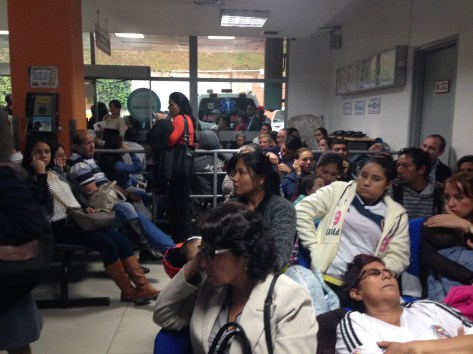
Thankfully, after registering, two chairs became available. I sat next to Carolyn, holding my little paper slip like I was waiting at the DMV. This is one of the few times in my life that I can honestly say I would have preferred to be at there as it undoubtedly would have been a more pleasant experience. Around me, every inch of the ER was filled. There were crying babies, distressed mothers and elderly people, the majority of whom looked worse than I did. People were collapsed in the chairs and flooding the floor. We continued to sit watching the never-ending list of names appear on the screen above. Finally, over an hour later, the name Lucy Mac, as apparently my middle name, MacPhail, is unpronounceable in the Spanish language, was called. After the less than helpful encounter with the skeptical nurse in triage, Carolyn went to check with admission who assured us that the wait to see the doctor shouldn’t be that long.

IMG_5772

The overcrowded emergency room waiting area

We spent a total of six hours waiting to get seen by the doctor. Initially, we stood, as all chairs were full, and the floor was covered with people, spilled drinks and trash. Eventually, though, I was feeling weak and Carolyn was tired, so we joined the masses on the floor. Carolyn went up repeatedly with my passport to check on my status in line. The number of people ahead of me fluctuated. First there were three, then two then one, then back to two, then three again. Apparently, cases were presented to the doctor in order of emergency and those with higher priority were able to jump the line. It made sense but I knew that despite feeling terrible, my lack of fever and unalarming triage exam meant that my turn would likely never come. Still, Carolyn kept going back. She told them how long we had been waiting, three hours, then four, then five and a half. Finally, the woman in admissions called the doctor to inform him that there was a sick American who had been waiting for hours. My name was called minutes later.

We went through another security guard and down a series of winding halls to the doctor’s office. I explained my symptoms, he asked me questions and Carolyn translated when I didn’t understand. He informed me that he thought that I had an infection and that something was obstructing my lower lungs. He read off a series of treatments and exams that I would go through before leaving, told me to find him if I got lost, and left Carolyn and me at the nurse’s desk. Finally, after a six-hour wait, I felt like I was in good hands.

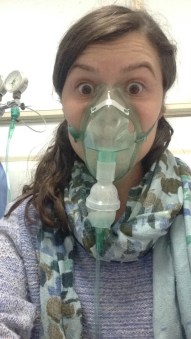
Carolyn dropped me off at my first stop, respiration therapy, and then left briefly to check in with her son at home. Momentarily alone, I was hooked up to a giant nebulizer where I was given a series of three medications over the course of an hour. As soon as the oxygen tank was turned on and the nebulizer began I felt better. So much better. For the first time in over a week I felt like I could breathe. Though I had spent nearly eleven days in bed resting, this was the first time that I truly felt relaxed. With each exhale my pain faded and my breath got stronger as vapor flooded the room like a dragon breathing fire. It was freaking awesome.

IMG_5777

Loving life during respiration therapy 

Every twenty minutes, the nurse switched out one medication for another, and while my lungs felt lighter and my breathing felt easier, I had no idea what was being put into my body. After an hour, a woman came into the room, looked at me and rattled off a long-winded question in Spanish. She spoke so fast that I didn’t understand and the machine was covering my nose and mouth so there was no way for me to respond. She looked at me like I was stupid and repeated the question until the nurse who had been helping me approached and explained that I was a foreigner. Immediately, her tone softened, and she explained, slowly, that we were going to get my IV.

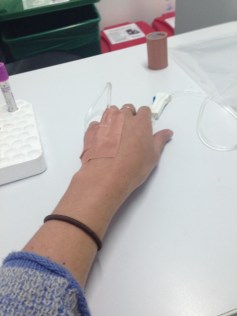
I sat down in the small room and attempted to start a conversation as she prepared my IV. Carolyn hadn’t returned yet but I wasn’t concerned. All it was an IV and while I hated shots, I knew I could tough it out. “Estoy nerviosa,” I said, “no me gusta…” and then I realized I didn’t know how to say needles. She looked at me concerned and I smiled and tried to reassure her I was fine, even though my confidence in my medical Spanish skills without Carolyn’s presence was falling at the same rate that my heart rate was rising. The nurse couldn’t fine a vain the first time she tried, and then when she did, she couldn’t draw blood. I was poked and prodded, flinching every time the needle struck my body despite her constant scolding to “no se mueven”. Finally, my blood was drawn. She then inserted my IV and started injecting random liquids into it. My whole left arm was cold. I asked if that was normal, she shrugged yes, and continued to inject things through syringes into the tubes in my hand. At that point, my heart rate was through the roof. I started to feel weird sensations throughout my arm and, my overactive mind started to panic. She inserted the last one, held up the syringe, said dolor the Spanish word for pain, and pointed at my lungs. I didn’t put two and two together until minutes later, after settling in the IV treatment area where I met up with Carolyn, I had a laugh attack. I still don’t remember what was so funny. Actually, sitting in the small room with several very sick people around me, nothing was funny. I don’t know what medicine was running through my body as I didn’t fully understand what the nurse had been explaining to me at the time of insertion, but what I did know, and what Carolyn could evidently see, is that I was high. So there I was, the young foreign traveler, having a senseless laugh attack in the middle of the emergency room. So much for not standing out.

IMG_5778

Getting injected with unknown medication

Apparently, at this point, my presence in the hospital was known. I was the extranjero, the foreigner. When Carolyn left the hospital to check in at home, she was warned by our doctor that they might not let her back in due to overcrowding and prohibition of patient guests in the ER. Upon her return, however, there was no trouble. She didn’t even need to explain herself as apparently she was already known as the extranjero’s translator. The front bouncer recognized her immediately and escorted her through the masses outside and the hectic waiting room to the second door into the actual emergency room.

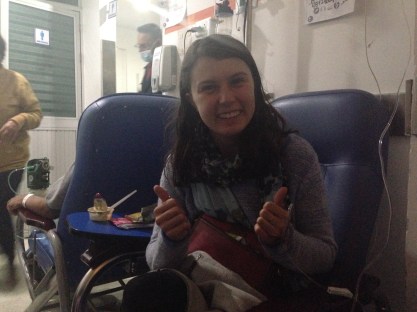
IMG_5779

Hanging out in the IV treatment room

We sat for two hours as I went through the IV treatment and then Carolyn went to find the nurse for my X-Ray. After a while, I went out to wait with her in the hall and realized that the Colombian Copa America soccer game was on in a small open room off of the hallway. Every seat was filled but I edged my way into the corner of the room. I was still hooked up to my IV, wrapped in cords and holding the fluid sack in my right hand, trying to avoid bumping the needle inserted in my left. The room overflowed with sick Colombians, hooked up to IVs just like me, coughing and wheezing but clearly more concerned with the game on the TV in front of them than their health. I was enthralled and momentarily more elated than I had been on the pain medication. The patients in the room were smarter than me. I wished I had thought of coming here sooner.

IMG_5826

Colombian soccer games were one of the few things that would get me out of bed when I was sick

Reluctantly I left the game and went to get an X-Ray. Surprisingly that process was easy. Six hours after finally being admitted to see the doctor we returned to his office. He looked at my test results and rattled off a diagnosis. Viral bronchitis, no antibiotics. He gave me an inhaler to help with my breathing, anti-inflammatory medicine and pain medication. All were to manage the symptoms. The illness was viral so the healing I would have to do by myself.

Carolyn and I left and headed towards the billing station, my IV still hooked up to my hand. I was shocked to see that the bill was barely over $100 USD. In the states, a six-hour ER stay, series of tests and treatments would have cost thousands of dollars. Finally, after paying, the nurse removed my ID and at 11:00 p.m. we were able to go home.

Throughout the day I was grateful. Grateful to know in the States the process would have been faster and I wouldn’t have spent nearly six hour sitting on an emergency room floor, grateful that in all other health situations in my life I have been able to speak English and understand what was happening to me, grateful that, in general, I am healthy and get to avoid hospitals altogether.

Most importantly, though, I was grateful to Carolyn. She had provided me a safe place to stay in an unfamiliar city and welcomed me into her family home. She believed that I was sick and, though I had my doubts about getting it checked out, supported me. She understood the complicated situation of having health problems far from home and the challenge of navigating a foreign hospital and attempting to understand medical terms in a second language. She didn’t leave me, despite the long wait, her children, and countless other things she could have been doing. She stuck with me all day. I was grateful for her patience, her advocacy and her translation.

After 12 hours in the emergency room, I left completely elated, my lungs invigorated, and my mind intoxicated by yet another new experience, though given the long, mostly frustrating day, I am pretty sure I was still under the influence of the hospital drugs. I was comforted by the care of the ER doctors and a diagnosis and mistakenly under the impression that I would get better in a couple of days. Little did I know, I wasn’t even halfway there…

I’m Not Sick


I feel powerless. And exhausted. And frustrated. And absolutely exhausted. My body has been fighting viruses, bugs, bacteria, insomnia for nearly a week now. My mind, however, has been waging a much tougher war against my body and against itself. My body is winning (or losing, depending on how you look at it). I am too tired, too weak to do anything and it is driving me absolutely insane.

It started a week ago, in Villa de Leyva, Colombia. On Sunday night, I started shivering uncontrollably, shaking while those around me comfortably sported t-shirts. My appetite disappeared and the thought of food made my stomach turn. I knew what was happening, after months of working without stopping and, now, weeks of travelling without stopping, my body had had enough. I was getting sick.

My entire life I have been uncomfortable with stillness. Action, moving, doing something (even if it is unimportant) feels better than relaxing or taking a day to do absolutely nothing. Unless I have earned it. Go ahead, laugh at me, I know right now that the universe is. I am the only one who is telling myself that seven straight weeks of solo travel to non-English speaking third world countries is not deserving of a break. Well, it was deserving of a one-day break, which I gratefully took in Villa de Leyva after a rough night of chills, hot flashes, fever and body aches. After that day of rest, though, it was time to get back to action. I sat in the Plaza Mayor, relishing in my seemingly renewed health, and decided I wanted to go to Ecuador. It was Tuesday, I would leave for Bogota the next day and Ecuador the day after. Brilliant. Stubbornly, I ignored my dad’s warning from the night before: feel healthy for 24 hours and then wait another 24 hours and then you can make a move. I felt better now and was ready to move on. Stubborn. Stupid. As I write that now, it sounds ridiculous. A week later, though, still just as sick and possibly even more tired, I am still struggling with the act of surrendering and letting go of control.

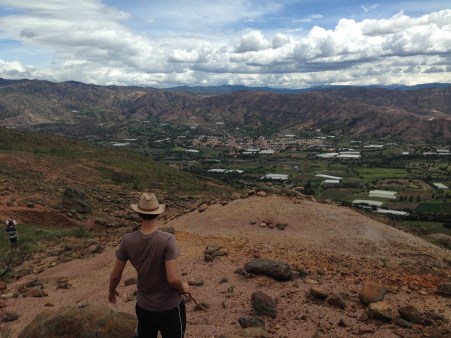
IMG_5457

A beautiful hike hours before coming down with the flu

It turns out, the night before leaving Villa De Leyva, I got a rare case of insomnia (in the past sleepless nights were a frequent occurrence in my life) and ended up sleeping from 5:30 – 7:00 a.m. Previously, during sleepless nights, I would pass the time by going out for 4:00 a.m. runs or sending random snapchats or text messages that I would forget that I sent until I got strange responses the next morning. I was in Colombia, however, and sick, and so neither of these were viable or safe options. New ways to spend this quasi all-nighter were rudely presented and came with a harsh reminder that I was not in my normal country, living my normal lifestyle, or in my right state of mind. Around 2:00 a.m., I encountered a cockroach trying to eat a mango that I had attempted to peal with a key at midnight the night before after my fever vanished and my hunger made an inconvenient and dramatic reappearance. The cockroach had a similar effect as the scorpion in Costa Rica and led me to leave the light on while humming myself to ‘sleep’ to drown out the sound of it eating through the plastic bag containing the mango. It was disgusting and I kept shuddering wondering how many of its friends were also sharing the room with me. A couple of hours later, under the influence of several melatonin, I came to the delusional idea that I wanted to spend more time with children during my travels (to those who don’t know, kids terrify me). So rather than sending soon to be forgotten text messages to friends back home, I started sending soon to be forgotten emails to Ecuadorian children’s organizations inquiring about volunteer opportunities. It wasn’t until I received a number of email responses from Ecuador in the coming weeks that I was able to put the pieces together. This brief illusion was shattered the next morning as I breakfasted with a screaming child who then threw a spoon at my head. That child-loving phase ended quickly.

Anyways, back to the point, if the delusional thinking and insomnia weren’t signs that I should have taken an extra day to rest, they should have been. My tunnel vision to make the most of my time before teaching prevented me from accepting that I needed more of a break. I staggered over to the bus station and bought a ticket back to Bogota. The bus ride was miserable. I spent the last two hours convinced that I was going to either throw up or pass out. It was then that I started to second-guess my decision to leave so early. Maybe I should push back Ecuador another day, I thought, I’ll leave on Friday. Spoiler alert: it’s currently Saturday and I’m still in Colombia with no ticket to Ecuador (and as I edit this for posting, a month later, the only time I have left my current five mile radius since writing this is to go to the doctor). So take a guess as to how far my planning, trying to control my illness and stubborn thinking got me.

IMG_5738

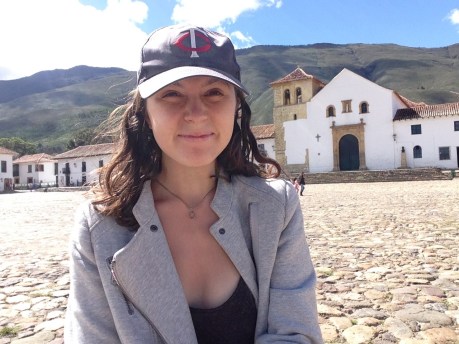
Feeling miserable after two hours of sleep, but still had to get a picture in the Plaza Mayor before leaving

To my credit, I tried to rest the next day. After hours in bed, though, I went on a walk telling myself that it was unacceptable to stay inside all day while I was in freaking Colombia (completely disregarding the fact that I have SIX MORE MONTHS HERE). I bundled up in sweaters and wandered down the street to a café because I was craving a hot chocolate. I thought I would go read in a café for an hour, drink something warm and then go back to the house. That was my plan. Well, I struggled down the street to the café, my lungs burned the whole way and I felt like I had walked for miles, when in reality it was less than three blocks. I ordered the hot chocolate, and when it arrived, just started crying. I was so, so tired. I couldn’t even read, all I wanted was to lie down. Rather than slowly sip it in an hour, like I usually do, I chugged it, desperate to get back to bed. I got back, immediately climbed into bed and slept for hours.

IMG_5751

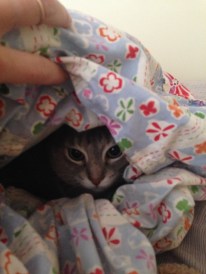
My nap time companion

I felt so guilty doing nothing. Fighting a 24-hour bug and sleeping for less than 2 hours the night before (to not even take into account traveling the past seven weeks without a break) didn’t seem deserving enough for a complete day in bed. Completely delusional, I know.

The following morning after my breakdown at the coffee shop, I woke up with a cold. My throat was raw and I was coughing. Still, it didn’t justify taking a full day in bed. Midday, I tried to take a walk around the block. I made it down the steps and around the corner before I felt like I was going to collapse. I turned around and spent ten minutes sitting on a bench, too embarrassed to reenter the house after leaving only minutes before. I was ashamed of being exhausted, embarrassed of being sick and too proud to admit that I needed more of a break.

I can stand up to the Cuban police, sneak myself into Colombia (more to come on that later) and defend myself against hustlers and overeager Latino men but for some reason, I could not admit and truly embrace the fact that I was and am sick. Sick, exhausted and completely powerless as to when I am going to get my full strength back. This lesson may not be as dramatic as the others I have had to learn but, my God, is it hard.

Now, it’s a beautiful day out, the first day with clear skies in a week. So of course, stupidly, I went to a café. My lungs are still burning, my arms are aching, and I am starting to laugh at how fucking stubborn I am still being. SERIOUSLY?! To top it all off, two screaming children just walked in. I’m really, really losing this war…

I’m trying to tell myself that the past week of bed rest and Spanish Netflix and reading hasn’t been a waste. It’s hard. There is a greater lesson in this, like there has been in every challenge that I’ve faced. Surrender. I need to surrender. What I need is to lay down, sleep, drink water and rest. No more pushing myself to do things that I am physically unable to do or trying to go places that I am currently incapable of enjoying. I am not in control. So I will make it to Ecuador, or I won’t. I’ll spend the next month in bed, or I won’t. I’ll go climb a freaking mountain, or I won’t. I have no idea what the next month holds for me but to try to plan, to try to control, to try to heal myself without actually taking the time to take care of myself will not help me. So, Dad, universe, everyone, I am surrendering. I am sick, I am exhausted, I am frustrated and I think I will leave these screaming children and go back to bed now.